Dead midsummer potpourri in central Canada 2026 — Ford faltering?, Senate reform or abolition?, UK politics’ new look?, year of old men with saxophones!
Jul 31st, 2026 | By Randall White | Category: In Brief
RANDALL WHITE. FERNWOOD PARK, TORONTO. FRIDAY, JULY 31, 2026. A few days ago Curtis Fric at Canadian Polling posted “After Years of Control, Ford Faces a Real Fight … A string of weaker polls and collapsing approval ratings are raising new questions about Doug Ford’s political future.”
(1) Ford faltering?
Curtis Fric’s post also raises a broad issue I opined on here a few weeks ago with “‘In Ontario Donald Trump is pronounced Doug Ford’ .. & Premier Ford’s current 21% approval even more appalling if he stays in office until April 2030.”
Premier Ford’s latest claim that the federal government has been listening to a “fringe group” on Toronto island airport expansion is still more appalling.
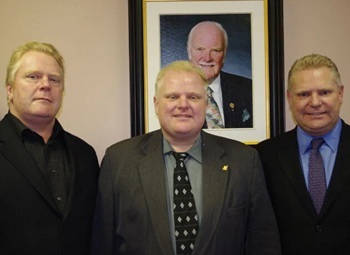
His conservative party has never won even close to a majority of the popular vote (an average of 41%) in any of its three elections in seven years. But thanks to a divided progressive opposition it has won decisive majorities of seats in the provincial legislature.
Moreover, only 44% and then 45% of all eligible voters turned out in the most recent 2022 and 2025 Ontario elections.— the lowest voter turnouts in the province’s history since 1867.
Doug Ford’s conservatives are the real fringe group in Ontario today.
It still seems to me, however, that constitutionally (as most recently formulated in legislation passed by Premier Ford’s large majority of seats in the legislature), Doug Ford can still remain in office until April 2030, regardless of what opinion polls, pundits, opposition politicians, or mere bloggers such as myself may say or do.
(2) Senate reform or abolition?
Earlier this month I posted “PM Carney’s Independent Advisory Board for Senate Appointments will be different from PM Justin Trudeau’s.”
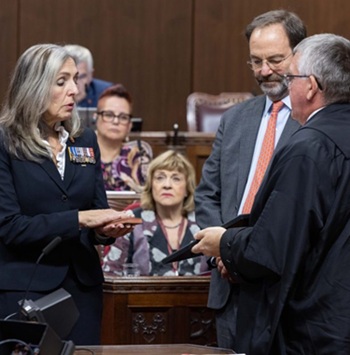
More recently, Joel Dryden has explained on the CBC News site how “Once seeking Senate reform, Alberta now ponders voting to be ‘rid of the darn thing’ … Red Chamber has long drawn ire in province as it argues unfair representation.”
I had alluded to Dryden’s point in the last sentence of my Independent Advisory Board piece : “serious Senate reform” is “altogether beyond anywhere Canada and its provinces are right now (even Alberta is just contemplating abolishing the Senate in its fall 2026 referendums).”
More recently still, David Coletto has reported on a new Abacus data survey : “Carney’s Senate Appointment Changes May Create More Political Risk Than Reward.”
What David Coletto evades in this survey, I think, is the real intention behind the prime minister’s Senate appointment changes. PM Carney is not trying to reap any “political reward” among the broader Canadian people.
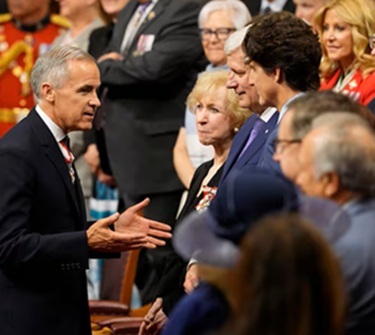
As the now retired Manitoba Senator Marilou McPhedran has recently underlined, Mark Carney is “nothing if not efficient.” And his current Senate appointment changes are simply meant to, as it were, improve federal government efficiency.
As I tried to make clear in my own latest contemplation on Senate reform in Canada : “one big trouble with the Justin Trudeau non-partisan reforms was that they created too many senators too taken with their own fresh legitimacy.”
I went on : “This meant too much legislation passed in the democratically elected House was getting stuck in the Senate for too long — as more respectably [but still merely] appointed senators spent too much time on already democratically settled issues, especially in PM Carney’s new era of urgent [and more efficient] … Canadian nation building.”
As David Coletto’s Abacus poll also suggests, a clear majority of the Canadian people do wisely “favour a fundamental change” to the unreformed Senate of Canada. The big practical trouble is that a democratically elected Senate with the current allocation of seats among provinces will be regarded in too many provinces as “unfair representation.”
At present (as in the past), that is to say, there is just no even remote consensus on change among even just the seven of 10 provinces now required for any constitutional amendment on a more fair provincial allocation of Senate seats. The largely 19th century scheme still prevails — 24 seats for each of Western Canada, Ontario, and Quebec, with 24 + 6 = 30 seats for Atlantic Canada (thanks to Newfoundland’s joining the confederation at last in 1949).
It has become clear as well that the equal provincial representation once advocated by “Triple E” Senate reformers in Alberta (“Elected, Equal, and Effective”) would give control of a reformed and democratically elected Senate to the six least populous provinces, representing a mere 13% of the Canadian people coast to coast to coast.
And so, to end where we started : “Once seeking Senate reform, Alberta now ponders voting to be ‘rid of the darn thing’ .”
(3) UK politics’ new look?

In the earlier years of my aging life Canadian media covered politics in the old imperial metropolis of the United Kingdom to a greater extent than they do today. And it was widely thought that the Canadian Liberal Party would eventually be replaced by what is now the Canadian New Democratic Party — much as Labour had replaced the Liberals in the UK.
In fact this does largely seem to have happened provincially in Western Canada, but as yet nowhere else provincially or federally at all (despite Jack Layton and Tom Mulcair). And it is at least mildly arguable that nowadays in the mid -2020s UK politics is growing more like Canadian politics than the other way around.
On one side of all this, eg, new UK PM Andy Burnham seems to be doing for the old governing Labour Party of Keir Starmer something somewhat like what Mark Carney has done for the old governing Liberal Party of Justin Trudeau.
There are, eg, at least early signs that Burnham replacing Starmer is working in the UK, not unlike how Carney replacing Trudeau has (so far at least) worked in Canada. See Allstair Smout’s recent report for Reuters : “UK’s Labour Party catches Reform in polls after Burnham becomes PM.”
(Just as Pierre Poilievre’s Conservatives in Canada surged to first place in opinion polls during the later Trudeau Liberal regime, Nigel Farage’s hard-right Reform UK surged to first place in the polls during the Starmer Labour regime. Since Burnham has succeeded Starmer as UK Labour PM the Labour Party has taken first place in the polls back from Reform UK.)

Meanwhile, for some of the new UK PM’s deeper problems see William Davies on “Burnham’s Political Economy” in the 9 July 2026 issue of the London Review of Books.
(4) Year of old men with saxophones!
Finally, I was personally somewhat thrilled to learn only a few days ago that it is now possible to buy a T shirt with the slogan “Never Underestimate an Old Man with a Saxophone.”
My wife asked with some gently sarcastic humour whether I wanted to actually buy one.
I confessed that my personal dress code prohibits wearing T shirts with slogans.
But I am happy enough to also confess now that I do think this particular T- shirt slogan makes A LOT of sense.