Forest fires bring big difference between Near and Far Northern Ontario into harsh light of Doug Ford’s working day
Jul 24th, 2026 | By Randall White | Category: In Brief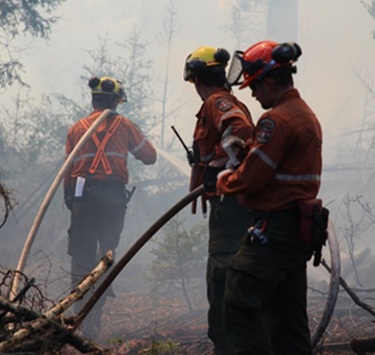
RANDALL WHITE. FERNWOOD PARK, TORONTO. FRIDAY, JULY 24, 2026. Among many other things, the 180 forest fires currently burning in (mostly Northern) Ontario — see eg “Ontario firefighters battling record wildfires … Ford government says it has increased resources” — bring a largely still evaded big difference between “Near Northern” and “Far Northern” Ontario into the harsh light of day, down here far away in the provincial capital city.
Like the Ontario forest itself, the current forest fires in the province are concentrated in Northern Ontario (which accounts for some 90% of Ontario’s land area but less than 10% of its population). And, although it is customary to distinguish between Northeastern and Northwestern Ontario, an equally or even more poignant distinction betwwen what might be caled “Near Northern” and “Far Northern” Ontario is still far less common.
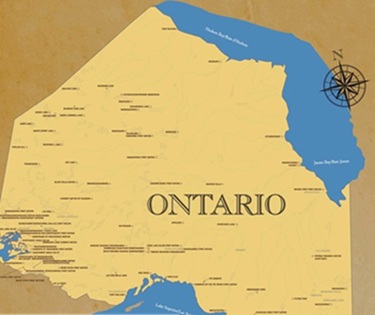
One key human geography feature of this last distinction is that there is no provincial or virtually any other large road network in Far Northern Ontario : “Secondary Highway 599, commonly referred to as Highway 599, is a provincially maintained secondary highway in … Ontario.” It “connects Highway 17 near Ignace with the remote northern community of Pickle Lake; its terminus at Pickle Lake marks the northernmost point on the provincial highway system.”
There is still a lot of Ontario land area north of the end of Highway 599. And this Far Northern Ontario is especially notable for First Nations communities “in remote northern regions accessible only by air or winter ice roads. Ontario contains more remote First Nations communities than any other province in Canada.”
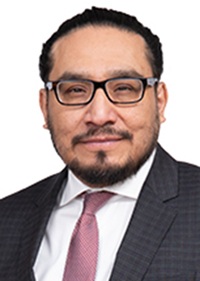
Northern Ontario generally — with a region-wide population of less than 800,000 people — has a First Nations population of more than 100,000 people. And a substantial share are in far northern First Nations reserve communities. Kathleen Wynne’s last Liberal government created a First Nations-majority constituency of Kiiwetinoong in the far north, and the New Democrat Deputy Leader Sol Mamakwa has sat for this riding in the Legislative Assembly of Ontario since its creation.
Sol Mamakwa was born in Sioux Lookout, Ontario and grew up in the Kingfisher First Nation — “an Oji-Cree First Nation reserve located 350 kilometres (220 mi) north of Sioux Lookout … It is accessible by air all year and by waterway in summer and ice roads in winter … the on-reserve population” is “462. The community speaks the Oji-Cree language, but most of it is fluent in English as well … The police that serve Kingfisher Lake are the Nishnawbe-Aski Police Service, an Aboriginal-based service.”
The (so-called ”Progressive”) Conservative government of the current Ontario Premier Doug Ford (like most of the rest of we Ontario residents no doubt) still largely sees Northern Ontario as the Near Northern resource-economy region serviced by the provincial highway system and focused around the cities of Sudbury, Thunder Bay, Sault Ste, Marie, North Bay, Timmins, and Kenora. And this is still a more geographically exotic and interesting place than many of us in Southern Ontario give it credit for.
At the same time, the 128 to 133 First Nations communities in Ontario at large include a surprising number similar to the Kingfisher First Nation of which Sol Mamakwa MPP is still a member — remote northern communities “accessible by air all year and by waterway in summer and ice roads in winter.”
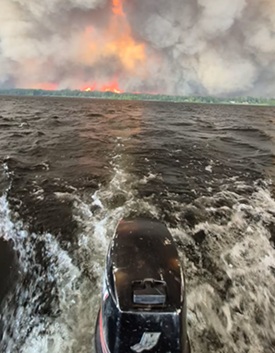
These Far Northern communities are still living closer to the so-called primeval forest than the rest of us way down south. It is not surprising that they have been especially hard hit in many cases by the current forest fire plague in Ontario. And so Timmins Today in the Near North has such key current headlines as : “Chiefs demand public inquiry, removal of MNR leadership [where MNR is Ontario’s Ministry of Natural Resources] … After multiple First Nations self-evacuated, their chiefs say that they were repeatedly told by the MNR that they were not in any danger until the threat was imminent and had reached their community.”
As the Ontario resource economy starts to expand still further north (as in “Ontario’s Plan to Build Mines Faster Attracts Billions in Additional Mining Investment”), the mainstream economy is already and will be more prominently bumping into the more deeply rooted and somewhat unique surviving First Nations culture of Far Northern Ontario. And everyone in the province (from First Nations to the most recent migrants from the global village today) all have new things to learn, understand, and do something sensible about, no doubt soon enough.