Senate reform in Canada back in the news .. chances are it won’t go far, just like the last several times since 1926 ??
May 8th, 2026 | By Randall White | Category: In Brief
RANDALL WHITE, TORONTO. FRIDAY, MAY 8, 2026. As an introductory aside this past Sunday, May 3 marked the 557th anniversary of the birth of the first modern political scientist, Niccolo Machiavelli, in the old city state of Florence, Italy (aka Firenze, in Italian).
Machiavelli has an inapt reputation as “an immoral cynic.” But his writing can still reveal more about the real world of politics than the work of many present-day students of the subject.
That, however, must remain grist for another post on another day.
The subject I want to offer a few quick (if inevitably somewhat complex) notes on here is Senate reform in Canada — a country whose federal upper house was criticized as The Unreformed Senate of Canada in 1926, and still remains essentially unreformed 100 years later in 2026.
(1) Senate reform in Canada : a quick introduction

I raised Senate reform on this site myself back at the end of March this year in “No Kings in USA also brings calls for Senate reform and an end to British monarchy in Canada (and Avi Lewis as New Democrats’ new federal leader).”
This drew on a piece by Jay Goldberg, first published in the Toronto Sun as “ Prime minister must act now to reform the Senate … Just because most Canadians don’t think about the Senate a whole lot doesn’t mean that the status quo should be acceptable.”
About a month later, towards the end of April, a parallel editorial appeared in the Winnipeg Sun : “Senate stacked against Canadian voters … Pierre Poilievre raised a point this week that should not be controversial in a country that calls itself democratic. He argued the Senate should better reflect how Canadians actually vote.”
Only a day later in April the work of the current unreformed Senate of Canada was criticized by the current Canadian governing party, as in “Liberals question Senate’s handling of bail reform bill … A senior government source told iPolitics that senators are slowing down a bill supported by the Liberals and Conservatives, as well as provincial and territorial premiers, and municipal police chiefs.”
(2) Latest Canadian Press articles on the Senate in Canada today

On May 3 this year Catherine Morrison at The Canadian Press published “Senator says growing list of vacancies signals ‘the end of an era’ for independence.”
This explained that “There are currently nine vacant seats in the Senate, with six more senators due to retire by the end of 2026. Prime Minister Mark Carney has not appointed any senators since taking office last spring … there are also 24 vacancies on the independent advisory board for Senate appointments, the body that provides non-binding, merit-based recommendations to the prime minister … New applications and nominations for Senate appointments through the Independent Advisory Board for Senate Appointments website aren’t currently being accepted … Non-affiliated Sen. Marilou McPhedran told The Canadian Press she’s convinced the vacancies point to ‘the end of an era … This is the end of senators being appointed through what is largely a community-driven selection process at arm’s length from the patronage of the Prime Minister’s Office … It’s going to go back to cronyism’ … She said patronage is a much more efficient way to govern, and that Carney is ‘nothing if not efficient’ … Since last May, the federal government has not directly answered repeated questions from The Canadian Press about how the next appointments will be made.”
On May 6 The Canadian Press finally published “Carney says he’ll consult Trudeau’s committee on Senate picks.”
This explained that “Prime Minister Mark Carney is holding his cards close to his chest on how he will go about making appointments to the Senate, amid a growing number of vacancies … Carney does say he will make his picks for the upper chamber ‘in due course,’ and he will consider advice from the appointments board established by former prime minister Justin Trudeau … The prime minister made the remarks in response to a question at a news conference in Montreal today … Some senators say they’re concerned about the growing list of vacancies in the upper chamber, with nine seats currently vacant and six senators set to retire later this year … Vowing to put an end to patronage in the wake of a Senate expense scandal, Trudeau kicked senators out of his caucus and set up an independent advisory board for appointments … Trudeau’s process fell under scrutiny when he made a series of partisan appointments before leaving office — including former Liberal MP Rodger Cuzner and prominent Liberal party donors.”
(3) Some (almost too) deep background
One crucial problem with the Senate of Canada established by what we now call the Constitution Act, 1867 (formerly the British North America Act 1867) is that it in theory has legislative powers equal to those of the democratically elected House of Commons. But as prescribed in section 24 of the Constitution Act 1867, it consists of members quite undemocratically appointed by the “Governor General … in the Queen’s Name” (or King’s name as the case is now, but was not in 1867 or from 1952 until 2022), ).
In the real world of Canadian politics this has effectively come to mean that Senators are appointed by the Prime Minister of Canada (advising the Governor General and so forth, in supposed constitutional theory). And this traditionally led to a long line of patronage appointments of senators who very narrowly backed-up the appointing Prime Minister’s political party.
What have often enough been seen as unseemly partisan patronage appointments of senators by Canadian prime ministers, strictly to aid and abet their narrowest political objectives, still contributes to the institution’s longstanding bad press. This in theory prompted Justin Trudeau’s government to establish the independent advisory board for Senate appointments noted above. (Which also enabled the new Liberal government to cover its bases on a different — and Alberta-backed — Senate reform proposal, advanced with scant success by Stephen Harper’s preceding Conservative government!)
It does seem a particular problem that the independent senators appointed by the prime minister in this way (and so far only by PM Justin Trudeau, who did manage to appoint 81 senators of all types in a chamber of 105 between 2015 and 2025) can increase many senators’ sense of their own legitimacy and importance in the wider parliamentary democracy. And in some critics’ eyes this may too often mean spending too much time rearranging the commas in a bail reform bill urgently and multi-partisanly supported by everyone else in the federal, provincial, and municipal governmental process. And, whatever else, Justin Trudeau’s apparent reversion to the old time-tested theory of efficient government in his final Senate appointments at least draws attention to this difficulty.
(4) What kind of Senate reform guy could PM Carney finally be … or not

It does seem a little interesting that PM Carney has so far been “holding his cards close to his chest on how he will go about making appointments to the Senate, amid a growing number of vacancies.” (Again nine of the current 105 seats are vacant at the moment — five in Quebec, and one each in Manitoba, Ontario, New Brunswick, and Newfoundland and Labrador.)
I am also struck by the view of Non-affiliated Sen. Marilou McPhedran who “said patronage is a much more efficient way to govern, and that Carney is ‘nothing if not efficient’.” According to the Canadian Press, “Carney does say he will make his picks for the upper chamber ‘in due course,’ and he will consider advice from the appointments board established by former prime minister Justin Trudeau.” That is not, I think however, a statement that is necessarily inconsistent with a belief in efficient government, in the spirit of Sen. McPhedran.
I think it is interesting in this context as well that Mark Carney grew up in Alberta, just like Pierre Poillievre. And he must have some opinion about, eg, the “Triple E” reformed Senate once urged by a committee of the Alberta Legislative Assembly.
I think too that PM Carney has sensibly enough not thought that Senate reform is an issue he will have to face in any serious way, in the present new age of global uncertainty. And that may very well prove to be the case.
The big problem in the end, it seems to me the long history of the issue suggests, is the in Canada often fraught question of regional and provincial representation. The old Triple E formula popular in Alberta (and just another way of saying a Senate as in the USA and Australia), with its Equal representation for each province, would mean giving the majority of Senate seats to the six least populous provinces, with only just over 13% of the Canada-wide population.
Electing senators in Canada (as again in both the USA and Australia today) is I think not possible without somehow first addressing the regional and provincial representation issue. The current arrangement of 24 senators for each of four regions, from Atlantic Canada west to Quebec, Ontario, and Western Canada — with six extra seats for Newfoundland and Labrador, which only joined the confederation in 1949 — makes no one happy for the long term. And the 10 provinces (and three territories) of Canada today seem nowhere near a place where at least even seven of 10 provinces (as required in the Constitution Act 1982) could agree on some new scheme of regional and provincial representation, short of the equal provincial representation which can’t work in any even democratic real world in Canada’s particular case. (And almost certainly does similarly tilt both the USA and Australia today somewhat to the right?)
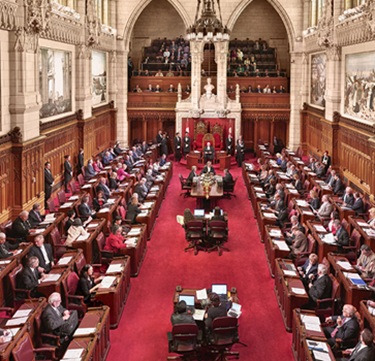
I have no idea if any of this could ever seriously intrigue the subtle mind of PM Carney. But so far I do agree with everything he has not yet tried to do in the complex and almost impossible world of Canadian Senate reform — a subjecr and an issue which I agree does remain important in our Canadian democracy. (And will continue to remain important until we finally do somehow manage to actually reform the unreformed Senate of Canada in a way that works.)
I guess I finally do think it will be interesting to see just what Mark Carney, Prime Minister of Canada, will do with the nine and counting vacancies in what at least used to be called the Red Chamber — and not just to honour the traditional colour of the Liberal Party of Canada. As the vacancies rise the pressure for some new Mark Carney approach to Senate reform could possibly arise. Even if this doesn’t seem too likely quite yet.