Should Canadians be pledging allegiance to a monarch across the seas or to the Canadian people and their institutions?
Aug 14th, 2026 | By Randall White | Category: In Brief
RANDALL WHITE, CANADIAN REPUBLIC NOTEBOOK. TORONTO. FRIDAY, AUGUST 14, 2026. Toronto’s annual “Canadian National Exhibition” (CNE) starts just a week ahead — August 21, ending Labour Day, September 7. And this is just one day before the start of Vancouver’s 2026 “Pacific National Exhibition” (PNE) — August 22–September 7.
These seasonal fairs in the air mean it’s also time to at least start waving goodbye to “August for the people and their favourite islands.” One approach currently in the news focuses on an issue of serious if still too much un-debated importance to the Canadian people, who form the real sovereign power in Canada’s “Westminster” parliamentary democracy of the 21st century.
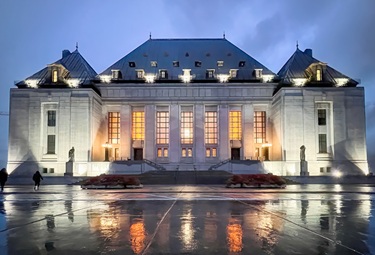
Two recent posts on the CBC News site illustrate the current state of this particular art : First, “Supreme Court of Canada to hear case on constitutionality of requiring oath to the Crown … Decision comes after Alberta’s top court decided requiring oath for lawyers violates Constitution.” Second, “Quebec law ending mandatory oath to King faces constitutional challenge … Lawyer takes aim at 2022 law scrapping requirement for Quebec legislators.”
The general form of the Canadian “oath of allegiance” involved here“derives from that which was, and still is, taken by parliamentarians in the United Kingdom.”
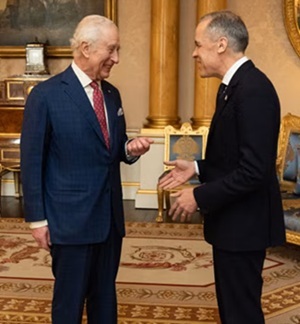
It runs : “I, [name], do swear that I will be faithful and bear true allegiance to His Majesty King Charles the Third, King of Canada, his heirs and successors. So help me God. ” As matters stand, those making this pledge may “choose to replace the word swear with affirm and to omit the phrase so help me God. The oath taker is also given the option of either swearing on a holy book or not.”
In fact, the particular oath of this sort currently taken by federal and provincial legislators in Canada is prescribed in section 128 of the Constitution Act 1867. Changing this oath does require a formal constitutional amendment. And it is highly arguable, legally, that the amendment Quebec has offered in making the oath optional for members of its National Assembly does not meet all the requirements now prescribed by the Constitution Act 1982.
No one, however, had formally challenged what Quebec has done, until Lawrence David at the University of Ottawa’s faculty of law quite recently filed an application in Quebec Superior Court on Monday, August 10, 2026.
The Alberta oath for mere lawyers now going before the Supreme Court is a less constitutionally rigorous issue. It is not required by either of Canada’s two main constitutional acts of 1867 and 1982. (Though it could no doubt be said to be at least inspired by section 128 of the 1867 act.)
As the independent Ottawa journalist Dale Smith has also noted in a recent report on the Alberta issue : “Several provinces have made the oath of allegiance optional or removed the requirement for lawyers to swear it as part of their call. It’s optional in Nova Scotia, New Brunswick, Ontario and Yukon, while British Columbia, Saskatchewan, and Prince Edward Island have done away with it entirely.”

At the same time, an oath bearing “true allegiance to His Majesty King Charles the Third, King of Canada” is also still required by ordinary federal law for new Canadian citizens. And the argument that such an oath almost obviously violates the Canadian Charter of Rights and Freedoms, at the start of the Constitution Act 1982, has been evaded by contending that “the Crown in Canada” does not finally involve an actual human being who lives in another coutnry across the seas.
Instead (to cite Dale Smith again), on this theory the Canadian “sovereign” is just “a symbolic representation of the Canadian state … The Crown” merely personifies Canada’s “organizing constitutional principles, including the rule of law.”
More than a few ordinary Canadian citizens (those born in Canada eg) who have never had to swear allegiance to anyone or anything to confirm their citizenship may reasonably regard this symbolic argument as mere sophistry.
Most Canadians obey the laws of Canadian governments not because they believe in some abstract constitutional entity called the Crown, but because they vote for these governments in elections, in what the Constitution Act 1982 quietly calls our contemporary “free and democratic society.”

Dale Smith’s report is worth citing yet again in this context : “‘Few people appreciate why we still have the oath and why it matters,’ says Philippe Lagassé, the Barton Chair in International Affairs at Carleton University and an expert on the Crown in Canada … ‘I don’t see that changing’ … He says challenges to the oaths reflect a general disinterest in the Crown, skepticism about the monarchy’s relevance, and a desire for a more contemporary conception of Canada and its institutions.”
As a (born-in-Canada) Canadian citizen myself, who joins many other supporters of a Westminister parliamentary democratic republic as the obvious expression of just such “a more contemporary conception of Canada and its institutions,” I personally support both the Alberta court that has declared the province’s oath to the Crown for lawyers unconstitutional, and the Quebec National Assembly that has declared such an oath optional for its members.
I finally suspect that this is a constitutional issue which the free and democratic Canadian people and their elected politicians ought to and even will have to take up formally and officially, as laid out in the Constitution Act 1982, in the not-all-that-distant future of “Canada and its institutions”!