No Kings in USA also brings calls for Senate reform and an end to British monarchy in Canada (and Avi Lewis as New Democrats’ new federal leader)
Mar 29th, 2026 | By Randall White | Category: In Brief
RANDALL WHITE, NORTH AMERICAN NOTEBOOK, TORONTO. SUNDAY, MARCH 29, 2026. According to Yahoo News : “More than 8 million people turned out at over 3,300 ‘No Kings’ protests across all 50 states on Saturday, organizers said, calling it the largest single-day demonstration in U.S. history. The first two rounds, in June and October 2025, drew an estimated 5 million and 7 million, respectively. Independent verification of the figures was not immediately available.”
Whatever the ultimate verification might suggest, it is clear enough from coverage online and on TV that some impressively vast (and enthusiastic) numbers of US citizens turned out to protest the second Trump administration’s increasingly bizarre blend of political comedy and tragedy in the USA today. And : “Bruce Springsteen performed ‘Streets of Minneapolis’ at the flagship rally in St. Paul, telling a crowd of at least 100,000 that ‘federal troops brought death and terror to the streets of Minneapolis. They picked the wrong city.’”
(1) No Tyrants in Canada … and No Kings too!

Meanwhile the US “No Kings” slogan raised some (somewhat amusing) domestic doubts in Canada. In fact we do officially still pay some vague and strictly symbolic allegiance to the current British monarch, Charles III. And this has prompted some Canadian commentators to talk about “No Tyrants” instead of No Kings. (Adding fuel to the fire, for reasons only he knows our excellent PM Carney is among the current minority of Canadians who support hanging on to the monarchy — as an institution of some at least symbolic consequence in Canadian public life.)
I have been particularly struck myself by a contribution from the remarkable Tim Bousquet at The Halifax Examiner. It’s called “No kings. Really, Canada: No kings.” And, entering via a door in some Epstein place marked “Edward Mountbatten-Windsor,” it ends with :“While the monarchy is no longer politically powerful, it maintains the trappings of the unconstrained; in fact, there’s nothing left except those trappings, and the resulting terrible behaviour … Let’s end this charade … No kings.” I find myself agreeing wholeheartedly.
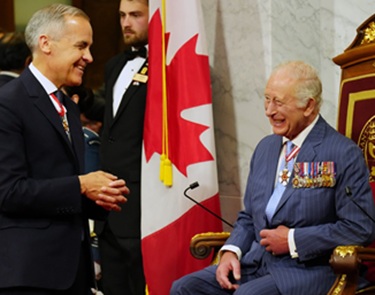
In Canada, I believe, getting rid of the British monarchy in our current Constitution will require following a plain and simple enough path, already pioneered by such international institutional brethren as the modern parliamentary democratic republics of Ireland and India. I can’t resist noting as well that my further views on this issue appear in the conclusion of my online work in progress, Children of the Global Village : Democracy in Canada Since 1497. It’s tentatively just called “Epilogue : the near future.” At least some people, it seems to me, should be starting to debate the (in fact quite minimal) institutional change involved in quietly and politely waving goodbye to the Constitution Act 1867’s continuing colonial role of the British monarchy in what the Constitution Act 1982 calls our “free and democratic society” in Canada today.
(2) Senate reform in Canada too … really?
I also can’t resist noting a recent piece by Jay Goldberg in the Toronto Sun : “Prime minister must act now to reform the Senate … Just because most Canadians don’t think about the Senate a whole lot doesn’t mean that the status quo should be acceptable.” This points to another of my own past enthusiasms. And I again agree wholeheartedly with the broad political feeling.
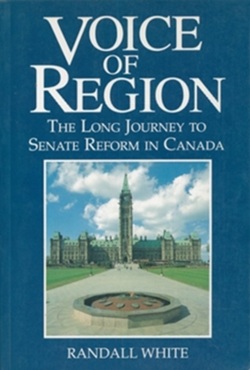
Again similarly, the institutional reform involved already has a parliamentary democratic precedent in Australia — what was a while ago sometimes called a Triple E Senate (elected, effective, and equal : also what now exists in the somewhat different version of democracy in the USA today) . It is possible to make this kind of democratic regional institution work in Canada\s kind of “Westminster” parliamentary government.
The problem in Canada’s case is the principle of “equal” representation for each province. Canada in fact is a confederation of four big and six small provinces — where more than 85% of the free and democratic people live in the four big provinces. Equal provincial representation in an elected and effective Senate would give at least control of the institution in principle to less than 15% of the Canada-wide population. And coming up with an alternative on which seven of 10 provinces can agree (as constitutionally required for change) is an assignment fraught with complexity. PM Carney no doubt has more urgent things to do with his time right now. Still … Jay Goldberg is also right about the present unacceptable status quo!
(3) Avi Lewis and the good folks of Forest Hill in Toronto who used to vote for his grandfather — “for the man not the party”
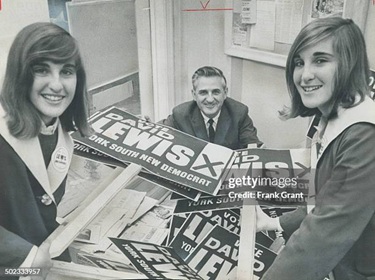
Finally Avi Lewis has now won the federal New Democratic Party (NDP) leadership race in Winnipeg, with some 56% of the vote on the first ballot. He spoke about his grandfather David Lewis in his rousing acceptance speech — and his grandfathers’s belief in the NDP as the people’s and workers’ party in Canada. I have a brief memory of my own now long enough life to share in this context, by way of conclusion.
David Lewis in his heyday was MP for a Toronto riding known as York South. It did include various neighbourhoods of what might be called workers’ or at least ordinary people’s housing. (I grew up in one of them.) But it also included something once called Forest Hill Village — an enclave of luxury homes inhabited by some of the city’s wealthiest people, including in my day quite large and growing numbers of wealthy Jewish families.

I had friends from and near Forest Hill in my North Toronto high school days — Jewish and otherwise. And I remember one of my Jewish friends who lived in a big house near Forest Hill explaining that his otherwise conservative well-to-do family voted for the Jewish Canadian intellectual David Lewis — “for the man not the party.” I tell this very short story not to in any way discredit the high-minded working people rhetoric of the new leader of the New Democratic Party of Canada. But it does suggest two things to me in 2026 : first, we live un a complicated country ideologically (and I think that’s a good thing); and second, Avi Lewis’s grandfather was a man whose intellect and character could appeal to a wider community than confirmed New Democrats. Avi Lewis will be fortunate if he can ultimately command some similar respect.