Alberta separatism today may be inspired by Quebec separatism, but it is not really the same at all (and does not want to be?)
May 19th, 2026 | By Counterweights Editors | Category: In Brief
COUNTERWEIGHTS EDITORS. GANATSEKWYAGON, ON. TUESDAY, MAY 19, 2026. Alberta is much in the Canadian news lately. One point of departure is : “New deadline for pipeline deal. Lower industrial carbon price. Carney government, Alberta strike deal to fast-track building new pipeline by 2027” (Tonda MacCharles). Or : “Carney, Smith sign carbon price deal, suggest fall 2027 pipeline approval” (The Canadian Press).
Arguably enough, for both provincial and federal governments pipeline action of this sort is at least partly addressed to whatever real forces lie behind the current Alberta separatist movement, vaguely modeled on the more ancient example in la belle province.
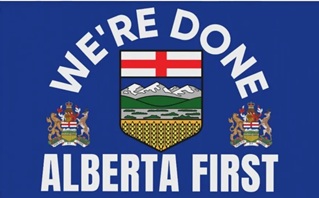
At the same time, this particular objective may have suddenly become redundant. Alberta courts, some now argue, have finally cut Alberta separatism off at the knees. See eg : “For Danielle Smith and Alberta separatists, no clear path left for referendum after court loss … Pressure mounting for premier to commit to the vote her UCP base wants, but First Nations have blocked” (Jason Markusoff, CBC News).
For some excellent related commentary try : “ How two Alberta judges shot separatist delusions to death … And, not for nothing, they probably just wrecked Quebec separatism, too” (Clarke Ries, in The Line, an Alberta-based “independent Canadian media outlet focused on politics, policy, and the forces shaping the country”).
Agreeing and disagreeing with Clarke Ries on Alberta separatism
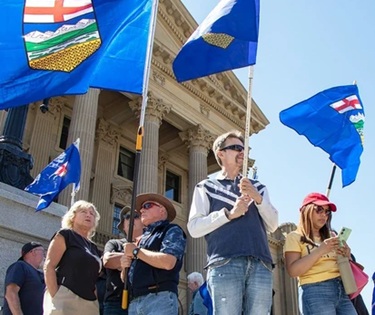
We counterweights editors here happily agree with the admirable Clarke Ries that current Alberta separatism is a “movement born out of petty resentment over the fawning treatment accorded to post-referendum Quebec.” (Well maybe not entirely “petty” or “fawning” but …)
The movement has now fallen to its knees, it is said, as a result of two court cases whose bottom line is that an Alberta-wide independence referendum on (and even the whole project of) Alberta separatism is constrained by Canadian First Nations’ constitutional “right to be consulted” about (if not to altogether “veto”) future plans for Canada and its provinces.
Our disagreement here focuses on Clark Ries’s already somewhat qualified suggestion that Alberta court cases on the more recent struggles of separatism in Alberta may have “just wrecked Quebec separatism, too.”
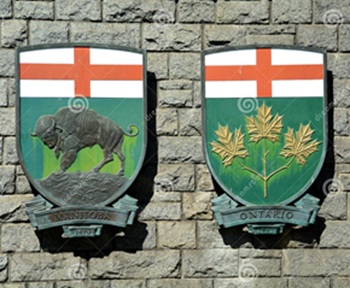
We altogether do not agree that recent defeats of Alberta separatism in the courts have “achieved the one thing that will actually make its constituents happy: dragging its Francophone rival for national attention and special treatment down with it.”
Our argument here no doubt betrays an Ontario prejudice that Canadians living west of but right next door to Quebec understand the province somewhat better than Canadians living a few thousand kilometres still further west, in such places as Manitoba, Saskatchewan, and Alberta.
Two sides of the distinct society in Quebec
There are nonetheless, we believe, two crucial ways in which Mr. Ries ‘s argument that Alberta court cases on the more recent struggles of separatism in Alberta may have “just wrecked Quebec separatism, too” misses the mark. Quebec, that is to say, is quite different from Alberta in two crucial ways.
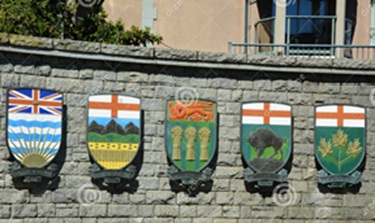
The first is just that the language of the democratic majority in Quebec is French not English — which makes it quite clearly different from every other province in Canada today. (New Brunswick, Canada’s only “officially bilingual province,” has a strong francophone or Acadian legacy minority — but that is quite different as well.)
The second big difference is that Alberta was created in 1905 by the federal Government of Canada, from the old Canadian Northwest Territories.
Unlike Alberta, what is now the Canadian Province of Quebec was not created by the post 1867 Government of Canada. Its long history as the heartland of “Canada or New France” since Champlain in the 1600s played a major role in creating today’s Government of Canada itself — and (more importantly) in creating the Government’s democratic master and mistress, the Canadian people (and the second-largest-in-the-world modern Canadian territory, coast to coast to coast).
Historical legacy of “Canada or New France”
One of the most intriguing mysteries of Canada and Quebec in the late 20th and early 21st centuries was that, after it finally became possible in the 1990s to report your ethnic or cultural origin as “Canadian” in the Census of Canada, the percentage of Canadians so reporting was larger in Quebec than in any other Canadian province.
(The unique popularity of Canadian ethnic origins in old la belle province changed somewhat with changes in options in the 2021 census. Even in 2021, however, “Canadian” remained the single largest reported ethnic origin in Quebec — more than twice the size of “Québécois” (and bigger still if you add the option “French-Canadian” to “Canadian.”)

One of the similarly surprising plain truths we here in our particular part of Southern Ontario learned from the 1980 and 1995 Quebec sovereignty referendums was that many Quebec sovereigntists/separatists also saw the Rocky Mountains as part of their somehow continuing Canada.
(Note that The Fur Trade in Canada sons of Pierre Gaultier de Varennes et de La Vérendrye were the first people of European descent to see this particular Western Canadian geography.)
A fundamental driver of the separatist urge in francophone Quebec has been the unwillingness or at best hesitancy of the rest of Canada to appreciate and even recognize Quebec’s crucial role in the creation of the modern sovereign Canadian people.
As the popular historian Pierre Berton pointed out, back some 46 years ago now, “Canadian” at the time of the War of 1812 which finally saved Canada from an earlier US annexation impulse, was a word “reserved for” the “French-speaking neighbours” of most of those of European descent in what is now Southern Ontario.
(And these people already mostly spoke the English language of both their British Empire and American Republic homelands — see Berton’s The Invasion of Canada 1812-1813, published by M&S in 1980, pp, 25-26.)
Just like Ontario, BC, Nova Scotia, and every other province outside Quebec in Canada today, Alberta (even with its current contribution to federal-provincial equalization payments, which Alberta itself received back in the program’s earlier days) has made no contribution to the modern Canadian people that can equal the decisive continuing legacy of “Canada or New France” — of which, like it or not, the Canadian Province of Quebec is also the great continuing custodian!