Back to Joe Clark’s “Community of Communities” vs Pierre Trudeau’s “Who will speak for Canada?” in current Canadian separatism debate? … Why not?
May 22nd, 2026 | By Randall White | Category: In Brief
RANDALL WHITE, TORONTO. FRIDAY, MAY 22, 2026. Here, humbly offered, is yet another quick note on the new gathering storm over Canadian separatism.
As in : “Leaders across the political spectrum are responding today to news that Alberta’s fall referendum will now decide whether Albertans want a vote on separatism this coming October.”
I’m not an altogether faithful fan of the CBC At Issue panel on Thursday nights. But if I notice something interesting in the endless news channel flipping that so often annoys my TV watching partner, I often do stop by.
Last night I was lucky enough to catch a highly civilized but admirably clear exchange between Chantal Hebert and Andrew Coyne, over what the big Canadian separatism debate going on right now really means. And it somehow suddenly did seem to make a few things clearer to me, in a historical sense I hadn’t quite grasped before.
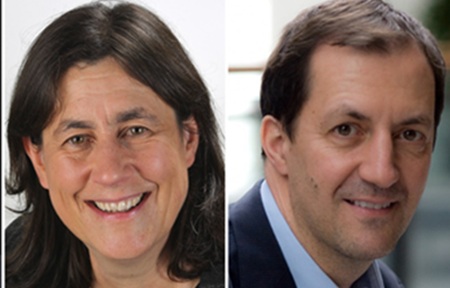
Ms Hebert began by suggesting that Premier Smith in Alberta (if I understand the point correctly) is now ultimately urging a view similar to that of another Conservative leader from Alberta, Joe Clark, back in ancient days. Clark had declared Canada a “community of communities,” in response to Premier Robert Bourassa’s quest for a “distinct society” in Quebec.
I had the (perhaps not altogether correct?) impression as well that Chantal Hebert was happy enough with this kind of decentralist vision of the Canadian confederation of 1867 today — within which all of Quebec, Alberta, other provinces (BC, Ontario, Nova Scotia, and so forth) and a strong (enough) federal government can somehow be accommodated.
Andrew Coyne then offered an alternative.
As best I can recall, he did not actually mention Pierre Trudeau, Prime Minister of Canada from the late 1960s to the mid 1980s (and prime mover of the Constitution Act 1982, as an ultimate federal-provincial response to the failed but still substantially supported Quebec sovereignty referendum of 1980).
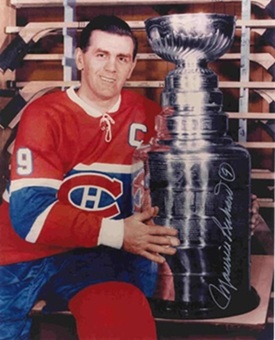
But Mr. Coyne nonetheless gave a deft account of the old Trudeau “Who will speak for Canada” Ottawa-centralist vision of the Canadian confederation — more strictly in the spirit of John A. Macdonald’s Constitution Act 1867.
Partly I suppose as someone who has recurrently worked for a living in and with provincial governments (who largely run the modern democratic welfare state in Canada), I lean towards the Chantal Hebert decentralist view. I also think, however, that there are things to be said for the more rigorous Canada-wide perspective advanced by Andrew Coyne, especially in 2026.
I am happiest to have finally seen something on TV that helped me understand what is going on in Canadian government and politics in late May 2026. Apparently it really is just a continuation of a now quite old and ongoing Canadian debate (for the past 50 years as I believe I heard Ms Hebert suggest, or was it Mr Coyne?).
In any case I think I think we will finally still be here 50 years from now, with both Alberta and Quebec still in a Canada — and some updated and improved Canadian confederation — that has grown somewhat stronger and more on top of its future than it is today! Why not?